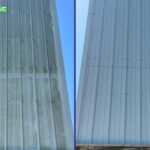
Ultimate Guide to Metal Roof Washing: Tips for a Sparkling Finish
December 24, 2025
Pressure Washing Drones: The Essential 2025 Guide
December 24, 2025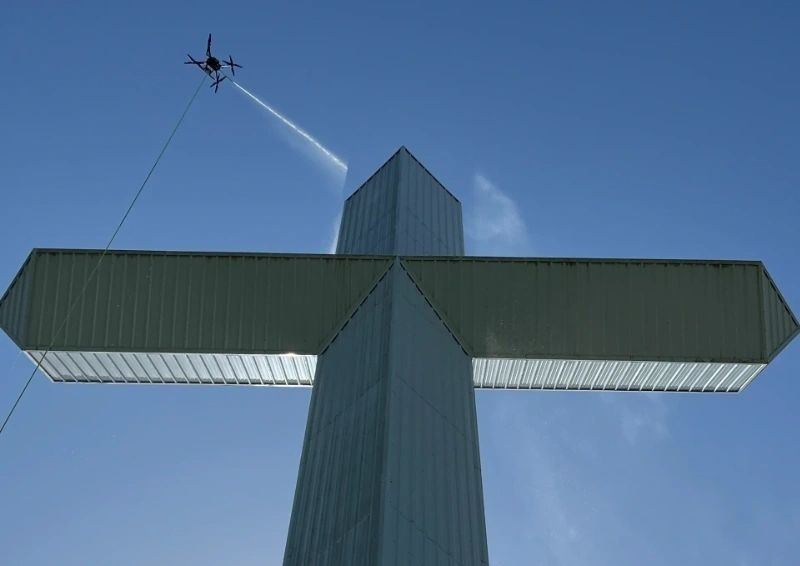
Metal roofs are a premium investment for any commercial building or residential property. They offer superior durability and longevity—often lasting 50 years or more. However, maintaining that finish requires a delicate balance. The accumulation of organic growth (algae, moss) and environmental pollutants (oxidation) creates a dilemma:
How do you clean a surface that can be ruined by a single footstep?
The traditional cleaning industry relies on pressure washers and ladders. For metal roofing, this approach is obsolete and dangerous.
At FlyWashDrone, we utilize industrial-grade drone technology to provide a 100% touchless cleaning solution. We eliminate the risk of structural damage, remove safety liabilities, and restore your roof’s aesthetic without a human ever leaving the ground.
The Critical Risk: Why You Should Never Walk on a Metal Roof
Before discussing how we clean, it is vital to understand why drone technology is the only manufacturer-recommended method for modern metal roofs. The risks of manual cleaning are severe:
1. “Oil Canning” and Structural Denting
Metal panels, particularly standing seam systems, are designed to expand and contract with temperature changes. They are not designed to support point-loaded weight. When a cleaning crew walks on your roof, even with “soft-soled” shoes, the metal flexes.
- The Result: “Oil canning”—visible waves, ripples, and dents in the flat areas of the panels.
- The Cost: This damage is permanent. It ruins the architectural lines of the building and can void manufacturer warranties.
2. Compromised Water Seals
Metal roofs rely on thousands of fasteners (screws) and washers to keep water out. The torque and friction from workers walking on the panels can loosen these fasteners or crush the neoprene washers.
- The Result: You get a clean roof today, but invisible leaks begin to form around screw holes, leading to internal water damage months later.
3. Surface Abrasion (The “Sandpaper Effect”)
Roofs are covered in dust, pollen, and microscopic grit. When a worker walks on the roof, their boots grind this grit into the paint finish (often Kynar 500 or similar coatings). This creates micro-abrasions that dull the finish and accelerate future corrosion.
The FlyWashDrone Solution: Precision Soft Washing
We do not use high pressure. We do not use ladders. We use chemistry and aerodynamics.
Our process is known as Drone Soft Washing. It differs fundamentally from “pressure washing.” Instead of using mechanical force (high PSI) to blast dirt off, we use a specialized chemical application that treats the root cause of the stain.
The Science of the Clean
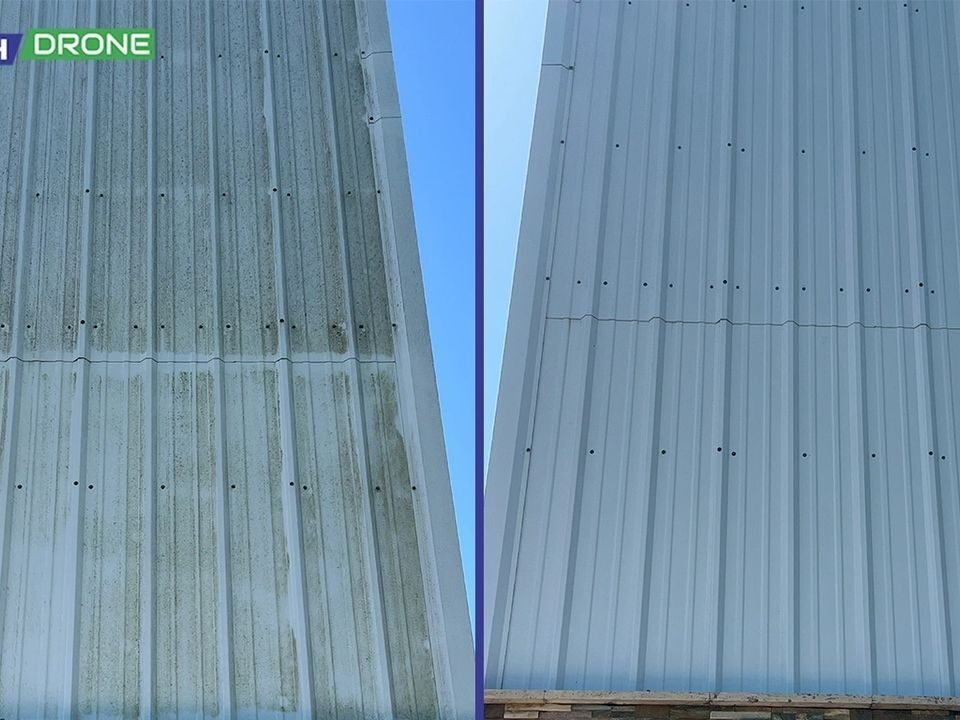
The black streaks on your metal roof are likely Gloeocapsa Magma, a cyanobacteria that feeds on moisture and humidity. The white haze is oxidation—the breakdown of the paint’s resin system.
Our drones apply a custom-blended, biodegradable solution that:
- Neutralizes Bacteria: Instantly kills mold, algae, and mildew at the molecular level.
- Lifts Oxidation: Gently loosens the chalky white residue without stripping the healthy paint underneath.
- Preserves Integrity: Because the process is touchless, the roof retains its original shape and seal.
How Our Drone Process Works
When you hire FlyWashDrone, you are hiring a technology partner, not just a cleaning crew.
Phase 1: Site Assessment & Safety Perimeter
Our certified pilots conduct a pre-flight survey. We identify HVAC intakes, electrical fixtures, and sensitive landscaping. We establish a safety perimeter to ensure no pedestrians enter the work zone.
Phase 2: The Soft Wash Application
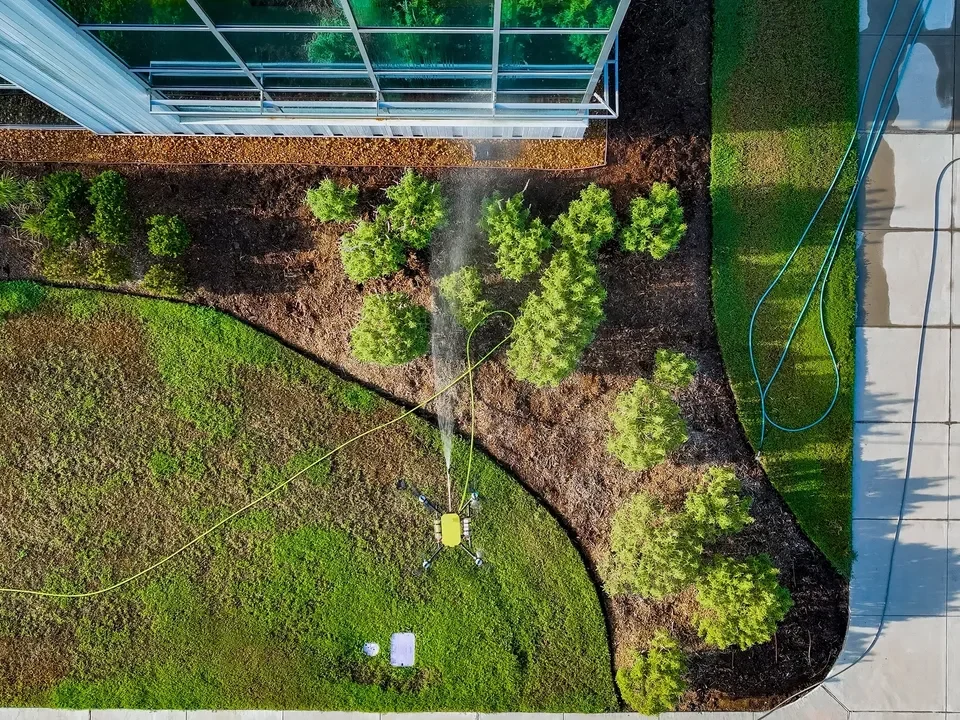
The drone launches and hovers at a precise altitude above the roofline. Using variable-pressure nozzles, the pilot coats the entire roof surface with our cleaning agent.
- Efficiency: A drone can coat a 10,000 sq ft commercial roof in a fraction of the time it takes a manual crew.
- Coverage: Drones can reach steep steeples, high peaks, and complex angles that are physically impossible for humans to reach safely.
Phase 3: The Dwell & Rinse
We allow the solution to dwell (sit) on the surface for 10–20 minutes. During this time, the chemistry breaks down the organic bonds of the dirt. Finally, the drone performs a high-volume, low-pressure rinse with fresh water, washing away the debris and revealing the sparkling finish beneath.
Specialized Metal Care
Different metals require different protocols. Our team is trained to identify and treat specific materials:
- Galvalume / Steel: We use a pH-balanced surfactant to prevent any reaction with the zinc-aluminum coating.
- Copper: We avoid harsh oxidizers that would strip the desired patina (green verdigris), unless a full restoration to “shiny penny” copper is requested.
- Stone-Coated Steel: We use a “no-friction” spray to ensure the decorative stone granules remain intact.
The ROI of Drone Cleaning
Why should facility managers and homeowners choose FlyWashDrone?
- Zero Liability: No workers at height means zero risk of slip-and-fall lawsuits on your property.
- Asset Protection: We extend the life of your roof by removing corrosive algae without inflicting mechanical damage.
- Curb Appeal: A clean roof immediately increases the perceived value of the property.
- Energy Efficiency: A clean, reflective metal roof absorbs less heat than a dirty, dark one, lowering cooling costs in the summer.
Secure Your Asset Today
Don’t let an amateur with a pressure washer experiment on your investment. If you value the structural integrity of your building, the only choice is touchless.
FlyWashDrone is leading the charge in automated exterior maintenance. Safe. Efficient. Effective.