Drone Metal Roof Cleaning: Prevent Dents and Oil Canning
December 24, 2025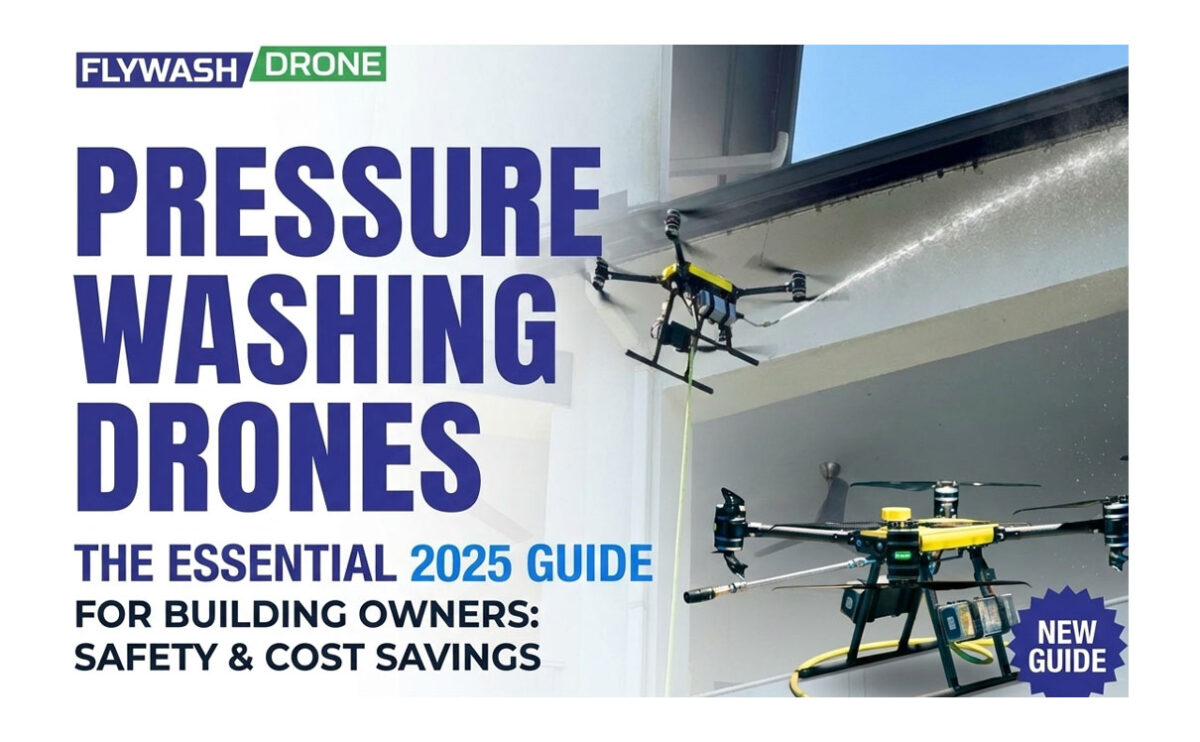
You already know exterior cleaning is a recurring headache. This guide helps you evaluate whether pressure washing drones are the right tool for your building, your budget, and your risk tolerance.
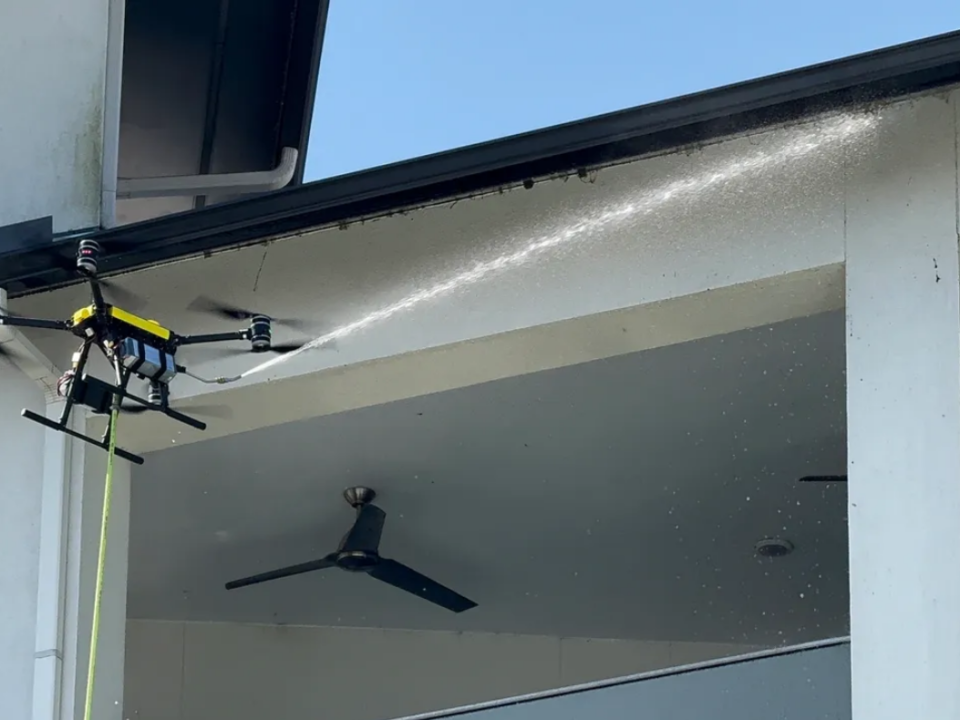
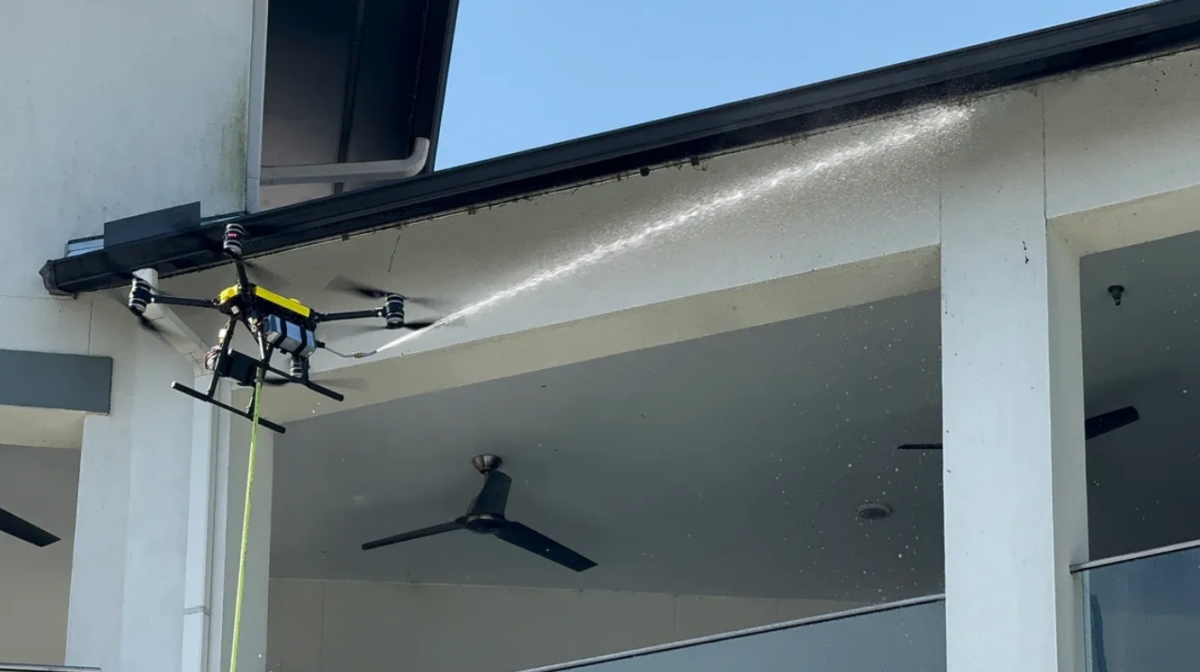
Pressure washing drones are commercial cleaning systems that use a controlled drone (often tethered) to deliver water or cleaning solution to exterior building surfaces without scaffolding, lifts, or rope access on many low- and mid-rise jobs. When planned correctly, they improve safety, reduce disruption, and make exterior cleaning costs more predictable for hotels, condos, and commercial properties.
Why building owners are looking at pressure washing drones now
If you manage a hotel, condominium, retail center, or low- to mid-rise commercial building, you’re balancing the same four pressures: safety, tenant/guest experience, budget control, and liability. Traditional exterior washing methods can work—but they often come with tradeoffs you feel every single time you schedule a job:
- Access delays: lifts, scaffolding, or rope access can require extra planning, approvals, and weather windows.
- Disruption: blocked entrances, loud equipment, restricted parking, or cordoned walkways upset guests and residents.
- Safety exposure: anytime people work at height, risk climbs—and so do insurance conversations.
- Cost volatility: the bill grows when setup is complex, the crew size increases, or the job drags into a second day.
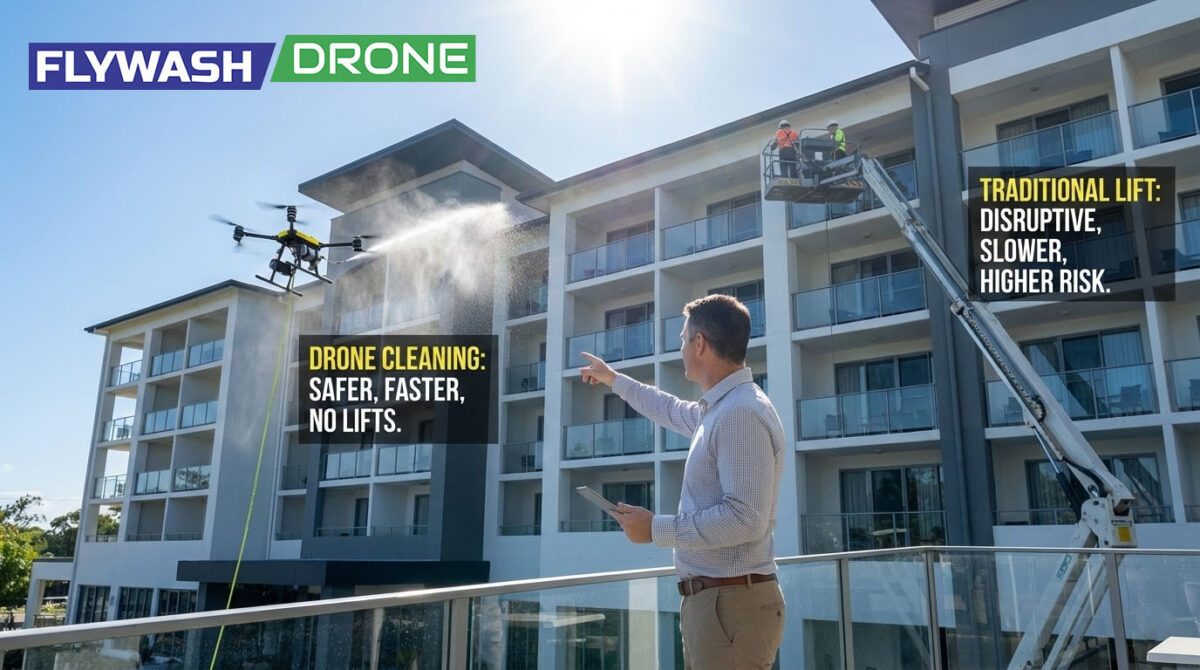
Pressure washing drones are worth your attention because they can reduce the “access penalty” on many exterior cleaning jobs. You’re not buying a gadget—you’re buying a different operating model: fewer people at height, faster setup, and cleaner scheduling.
What pressure washing drones can clean (and what they should not)
The fastest way to make a smart decision is to separate what drones are excellent at from what they are not built to do. Most disappointments happen when someone expects a drone to replace every other method on every building.
Best-fit use cases (commercial reality)
- Low- to mid-rise exteriors: hotels, condos, office parks, mixed-use, retail façades.
- Large, repeatable surface areas: broad walls, panels, façade sections, and consistent elevations.
- Hard-to-reach zones: areas where lifts are slow, expensive, or impractical (courtyards, landscaped perimeters, narrow setbacks).
- Time-sensitive sites: properties where you must reduce disruption (guest-facing hotels, active retail, resident-heavy condominiums).
Common limitations (set expectations upfront)
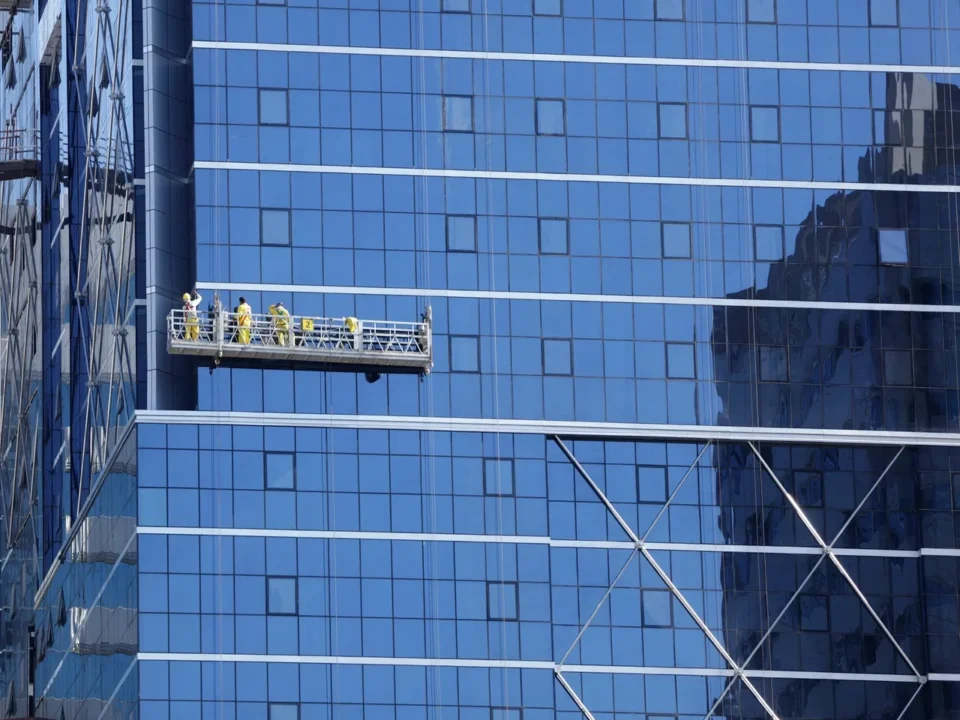
- Very tall high-rises and skyscrapers: many require specialized access methods, permits, and crews beyond typical drone scope.
- Interior window cleaning: drones are for exterior work; interiors remain manual.
- Detail-level hand finishing: corners, narrow recesses, and intricate ornamentation may still require targeted manual work.
- Wind and weather constraints: professional operators follow strict safety thresholds and will reschedule when conditions aren’t safe.
Bottom line: a pressure washing drone is not “the only method.” It’s a high-impact method that can reduce your reliance on high-risk access options on many recurring maintenance jobs.
Pressure washing vs soft washing: what building owners should understand
“Pressure washing” is often used as a catch-all term, but on commercial exteriors, the method matters. The right approach depends on the building material, contamination type, and risk of surface damage.
Pressure washing (higher mechanical force)
Pressure washing relies on water force to remove grime and buildup. It can be effective for durable surfaces, but it must be controlled carefully. The owner’s risk is straightforward: the wrong pressure or nozzle selection can cause surface wear, etching, or water intrusion on sensitive materials.
Soft washing (lower pressure + chemistry)
Soft washing uses lower pressure with cleaning solutions designed to break down organic growth and staining. It’s often preferred for painted surfaces, certain façade finishes, and areas where preservation matters as much as appearance.
A professional drone cleaning operator doesn’t default to “maximum power.” The best crews treat drones as a precision delivery platform—matching the cleaning method to the surface, and prioritizing long-term building integrity.
How drone pressure washing works on a commercial site (in plain English)
A commercial pressure washing drone operation is not “fly and spray.” It’s a controlled workflow designed to protect people, property, and surfaces—while delivering measurable efficiency.
Typical workflow on hotels, condos, and commercial buildings
- Site assessment: confirm building height, setbacks, access points, water supply options, and sensitive areas (signage, cameras, landscaping).
- Risk & safety plan: define ground safety zones, pedestrian routing, work hours, and spotter roles if needed.
- Surface evaluation: identify materials (glass, EIFS, brick, metal panels, painted surfaces) and choose safe cleaning parameters.
- Operational setup: staging area, hose management, protective measures for runoff zones, and equipment checks.
- Controlled cleaning passes: systematic sections of the façade to prevent streaking and ensure full coverage.
- Quality verification: visual checks, touchpoints for sensitive areas, and “redo” passes where necessary.
- Wrap + reporting: document completion, note any façade issues observed, and recommend next-cycle maintenance.
For a building owner, the key difference is this: a good drone cleaning team treats your property like a managed worksite—not a demo stage. That’s how you get the benefits without chaos.
Safety and liability: why drones change the risk profile
If your exterior cleaning plan requires workers at height, your risk profile automatically includes fall exposure, access equipment safety, and higher liability sensitivity. Pressure washing drones change that equation by reducing how often humans must work at height for many low- and mid-rise tasks.
What “safer” actually means in practice
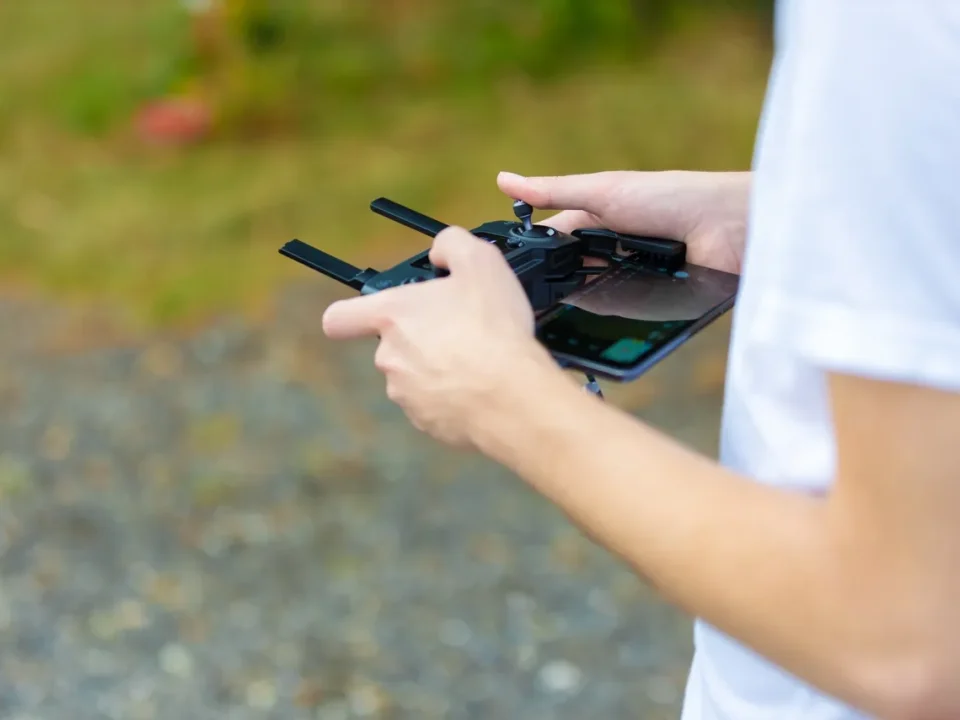
- Fewer people exposed to height risk: operators remain ground-based in many deployments.
- Less reliance on scaffolding/lifts: fewer access structures = fewer setup hazards and fewer site disruptions.
- Clear ground control: professional crews establish safety zones and controlled work patterns.
Insurance and documentation (what you should ask for)
Building owners and property managers should treat vendor documentation as part of the project—not an afterthought. Before work starts, request:
- Proof of commercial liability coverage and relevant endorsements
- Worker safety protocols and site plan (especially for public-facing properties)
- Operator qualifications and FAA compliance approach (commercial UAS operations)
- Process for protecting guests/residents and managing access
Takeaway: drones don’t remove responsibility—but they can reduce the highest-risk components of exterior access work when operated professionally.
Minimum disruption: what matters to hotels, HOAs, and occupied properties
“Clean building” is good. “Clean building without upsetting tenants, guests, or customers” is what you actually want. For hotels, disruption is a brand problem. For condominiums and HOAs, disruption becomes a relationship problem.
Disruption control tactics that separate pros from amateurs
- Off-peak scheduling: early windows, mid-day blocks, or quiet hours depending on your property type.
- Smaller footprint staging: reduce blocked parking, entries, and loading zones.
- Clear signage and routing: protect pedestrians while keeping traffic moving.
- Section-by-section execution: avoid “all-day mess” by completing visible sections in a structured sequence.
A drone-enabled approach often reduces the “construction vibe” that scaffolding and lift equipment can create—especially in guest-facing environments.
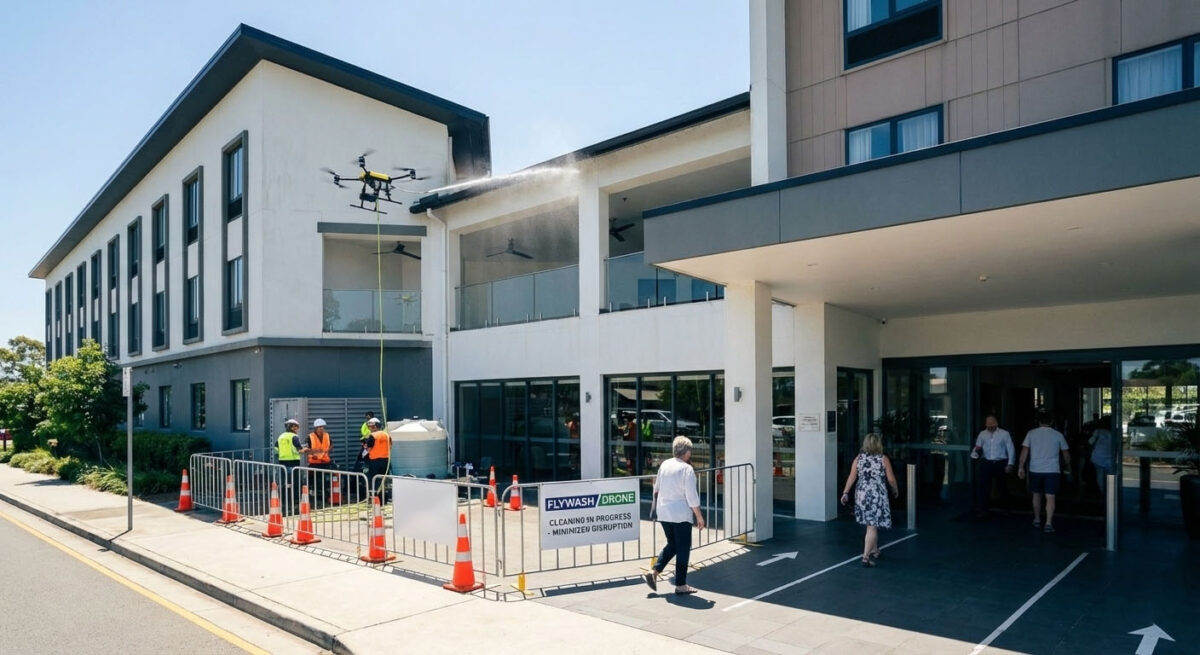
Cost control: how pricing works for pressure washing drone projects
Most building owners don’t want “the cheapest” cleaning—because cheap becomes expensive when work is delayed, surfaces are damaged, or disruption triggers complaints. What you want is predictable cost that matches scope and risk.
What drives the quote (and what you can control)
- Building height and geometry: straight façades are faster; complex shapes add time.
- Surface material sensitivity: more testing and lower-pressure methods can add planning time (worth it for protection).
- Soiling type: organic growth, pollution staining, and greasy residues have different treatment needs.
- Access logistics: water supply, staging, and runoff containment affect setup.
- Occupied-site constraints: limited work windows may affect pace and scheduling.
- Documentation requirements: some clients need extra reporting, insurance specifics, or compliance documentation.
Why drones can reduce “hidden costs”
Traditional projects often grow in cost due to access complexity—extended setup, additional crew time, or weather delays that require remobilization. Drone operations can reduce that volatility by simplifying access on many low- and mid-rise jobs.
If you want a baseline, start with a property-level assessment rather than guessing. You can request a quote or evaluation via FlyWash Drone’s contact page or review expectations on the pricing page.
Compliance: what “professional” looks like for commercial drone cleaning
Compliance is not a buzzword—it’s what prevents headaches. For commercial drone cleaning, compliance typically includes operational discipline, documented safety practices, and adherence to commercial drone operating rules.
What you should look for (owner’s checklist)
- Commercial operating readiness: clear site plan, safety zones, and a defined workflow.
- Documentation maturity: insurance, process notes, and job documentation when required.
- Environmental awareness: runoff management where needed and protection of landscaping/entryways.
- Surface protection approach: method selection that matches the façade material, not a one-size-fits-all spray.
If your property requires specialized procedures (for example, high-traffic public areas or sensitive signage zones), your vendor should be able to adapt the plan without improvising on the spot.
Decision matrix: when to choose drone pressure washing vs traditional methods
Use this quick decision matrix to decide whether a drone-based approach is a strong candidate for your building. (It’s not a sales tool—just a practical filter.)
| Scenario | Drone Pressure Washing | Traditional Lift/Scaffold/Rope |
|---|---|---|
| Low- to mid-rise façade cleaning (hotels, condos, office parks) | Often ideal for speed, safety, and reduced disruption | Works, but access setup can increase time and disruption |
| High-rise skyscraper exterior | May be limited depending on scope and site constraints | Often required for full coverage and detailed access |
| Guest/tenant sensitivity (noise, blocked entrances, parking) | Strong advantage with smaller footprint staging | Can be disruptive depending on equipment and duration |
| Highly detailed architectural features | Good for broad surfaces; may need manual finishing | Better for precision detail work at height |
| Cost predictability and scheduling reliability | Often improved by faster setup and fewer access variables | Can vary significantly due to access complexity |
Takeaway: drones excel when your biggest friction is access, disruption, or safety exposure—especially on low- and mid-rise properties.
What to ask a vendor before approving a drone pressure washing job
If you want a smooth project, treat vendor selection like an operational decision—not a marketing decision. Here are questions that reveal whether a provider is built for commercial work.
Operational readiness
- How do you set pedestrian safety zones and protect guests/residents?
- What is your plan for staging, hose management, and traffic flow?
- How do you handle rescheduling due to wind or weather?
Surface protection
- How do you evaluate façade materials and choose appropriate cleaning methods?
- Do you test a small area before full execution on sensitive finishes?
- How do you prevent streaking and ensure consistent coverage?
Risk and documentation
- Can you provide proof of insurance and commercial operating procedures?
- Do you provide completion reporting or before/after documentation if requested?
- How do you handle water/runoff considerations for this property?
If a vendor can’t answer these clearly, the technology doesn’t matter—you’re still taking operational risk.
Where FlyWash Drone fits (services built for commercial stakeholders)
FlyWash Drone focuses on commercial exterior cleaning where owners and property teams care about safety, minimum disruption, efficiency, cost control, and compliance. That includes recurring maintenance and targeted improvement projects across:
- Facade cleaning for commercial buildings and multi-family properties
- Window cleaning for hotels, condos, and low-rise commercial structures
- Roof cleaning where safer access reduces disruption and risk
- Hotel drone cleaning designed around guest experience
- Billboard drone cleaning when access is difficult or time-sensitive
If you’re evaluating whether drone pressure washing is suitable for your building, the fastest way to get a clear answer is a site assessment. Start here: Request a free estimate.

Frequently asked questions (FAQ)
Are pressure washing drones safe for building surfaces?
They can be, when the cleaning method is matched to the surface material and contamination type. Professional operators prioritize controlled settings, testing on sensitive finishes, and consistent pass patterns to reduce surface risk.
Do pressure washing drones replace scaffolding and lifts completely?
No. Drones can reduce reliance on traditional access methods on many low- and mid-rise jobs, but detailed work, interior windows, and certain high-rise scopes may still require lifts, rope access, or other specialized methods.
Will drone cleaning disrupt guests, residents, or businesses?
Disruption is usually lower when staging is compact and work is planned in sections. The right vendor will define safety zones and scheduling windows that protect foot traffic and maintain access to entrances and parking.
How do I know if my building is a good candidate?
The best candidates are low- to mid-rise properties with repeatable façade surfaces, access limitations, or high sensitivity to disruption. A site assessment can confirm feasibility quickly—especially for hotels, condos, and commercial buildings with complex setbacks.
What should I check before hiring a drone pressure washing provider?
Ask about safety-zone planning, insurance documentation, surface evaluation approach, weather policies, and how they manage staging and runoff. A professional provider will have clear, repeatable answers and a structured workflow.
Quick next step: get clarity before you commit
If you’re considering pressure washing drones for your property, don’t guess based on internet videos. Get a practical evaluation that considers your building material, access constraints, and disruption requirements. Request a free site assessment and quote from FlyWash Drone.